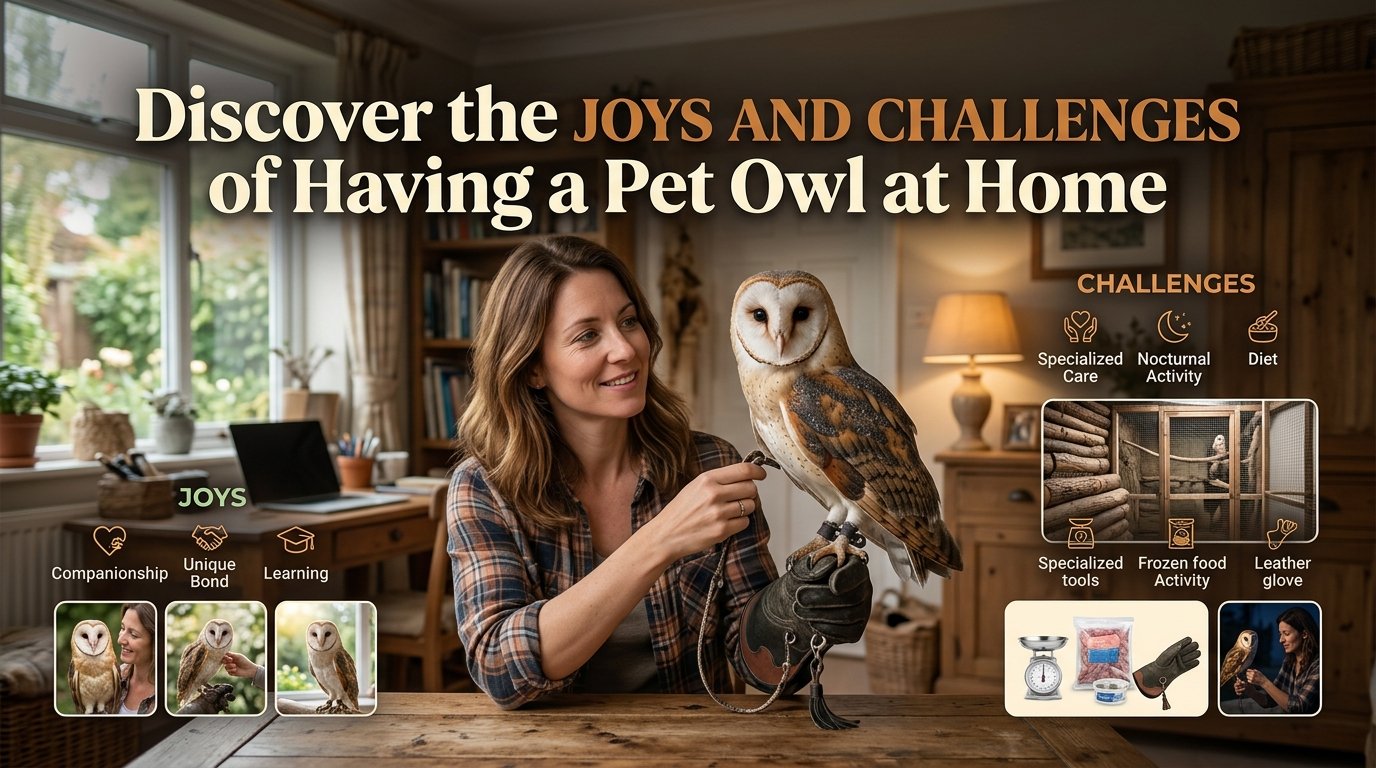

Owls are fascinating creatures, and having a pet owl can be a unique and rewarding experience. Many people are drawn to exotic pets like owls because of their intelligence, beauty, and unusual behaviour. Owning a pet owl is not like keeping a typical pet bird; it requires dedication, patience, and proper knowledge.
Before bringing a pet owl into your home, it is important to understand their needs. From owl care to owl diet and owl habitat, each aspect is crucial for keeping your owl healthy and happy. You also need to consider their nocturnal pet behavior and how it might affect your lifestyle.
A pet owl can offer companionship unlike any other animal. They are clever, interactive, and often form strong bonds with their owners. However, there are challenges to consider, including owl legal ownership, owl health, and long-term commitment. This guide will help you understand the joys and responsibilities of keeping a pet owl.
Understanding the Temperament and Behavior of a Pet Owl
Understanding a pet owl’s temperament is essential before bringing one home. Different owl species exhibit unique personalities, and some are more social than others. Generally, owls are intelligent, alert, and curious. They are nocturnal pets, which means their activity peaks at night. This can affect your daily routine and sleeping patterns if your owl is kept indoors. Observing owl behavior closely helps you understand when your pet is happy, stressed, or bored.
Signs of a happy owl include alert eyes, calm posture, and vocalising softly. Socialising a pet owl takes patience, especially for baby owls. Spending time with your owl daily encourages bonding and trust. It is important to ensure owl safety by keeping them away from household hazards, other pets, and young children. For many owners, the owl companionship is rewarding, as these creatures respond to care and attention in remarkable ways.
Case Study: One UK family shared that their pet owl became more interactive after six months of consistent socialisation. They observed a clear difference in behaviour once the owl learned to trust them. Such experiences highlight how understanding owl behavior can enhance the relationship between owner and owl.
Essential Care Tips for Keeping a Pet Owl Healthy
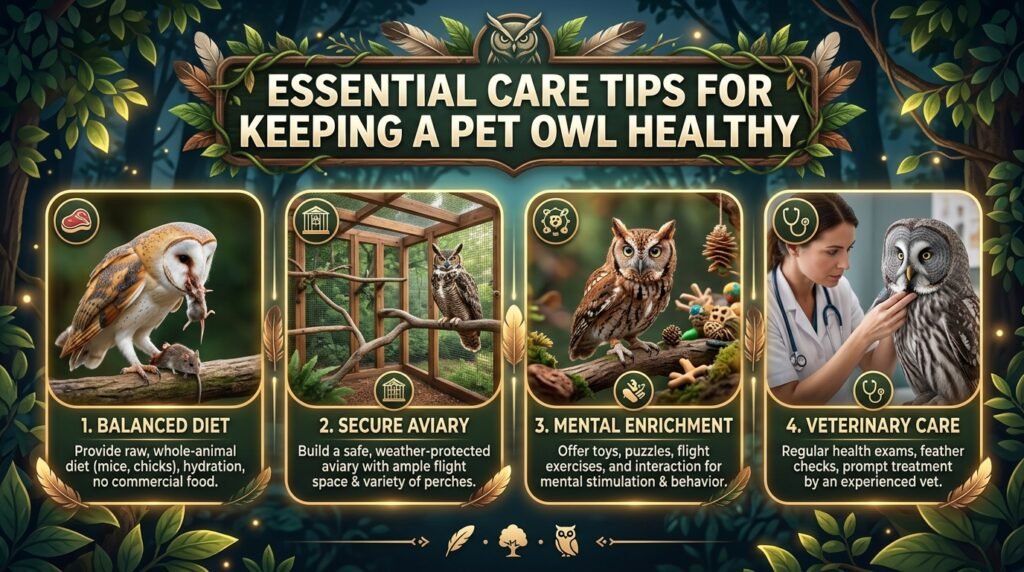
Proper owl care is critical for a healthy and thriving pet owl. Diet is one of the most important factors. Knowing what owls eat and maintaining a balanced owl diet ensures your owl receives the nutrients it needs. Most owls eat small mammals, birds, or specially prepared frozen food. A feeding schedule for owls is essential to mimic their natural hunting patterns and maintain their health.
Health monitoring is equally important. Regular check-ups can prevent common owl diseases and detect issues early. Baby owl care requires extra attention, including temperature control and frequent feeding. Mental stimulation is also vital. Owl training and teaching owls tricks can reduce boredom, strengthen bonds, and enrich their lives.
- Rotate perches and toys to keep your owl engaged.
- Observe signs of a happy owl, such as preening and calm vocalising.
- Maintain clean enclosures to prevent infections.
A well-cared-for pet owl can live a long life. Understanding pet owl lifespan helps owners plan for long-term commitment. Owls thrive when their physical, emotional, and social needs are met consistently.
Legal Considerations Before Owning a Pet Owl
Owning a pet owl comes with strict responsibilities. Owl legal ownership varies between countries, especially between the UK and the US. Some owl species require permits or licences. Failing to comply with regulations can lead to fines or confiscation. It’s crucial to research local laws before considering owning an owl legally.
Legal requirements often include restrictions on keeping certain exotic pets, ensuring appropriate owl enclosure standards, and following welfare guidelines. In the UK, the Wildlife and Countryside Act regulates which species can be kept, while in the US, the Migratory Bird Treaty Act and state laws apply.
Understanding these legal considerations protects both the owl and the owner. Consulting with experts or avian veterinarians can provide guidance. Adhering to laws demonstrates responsible ownership and ensures your pet owl enjoys a safe and compliant home.
Choosing the Right Habitat for Your Pet Owl
Creating the ideal owl habitat is essential for the health and happiness of your pet owl. Owl enclosures should be spacious enough to allow flying and perching comfortably. Indoor vs outdoor owl care depends on your living environment, climate, and the specific owl species. Proper perches, safe climbing areas, and hiding spots help mimic natural surroundings.
Setting up the habitat also involves considering owl safety. Keep the enclosure secure from predators, other pets, and harmful objects. Temperature control is vital, especially for baby owl care, as young owls cannot regulate their body heat effectively. Enrichment items, like toys or branches, encourage natural behaviours and reduce stress.
| Requirement | Recommendation |
| Enclosure size | Large enough to fly |
| Perches | Multiple heights & materials |
| Shelter | Safe, dark resting area |
| Diet area | Clean feeding station |
| Temperature | Species-specific control |
A well-structured owl habitat ensures your pet owl stays healthy, active, and content.
Common Challenges and Rewards of Having a Pet Owl
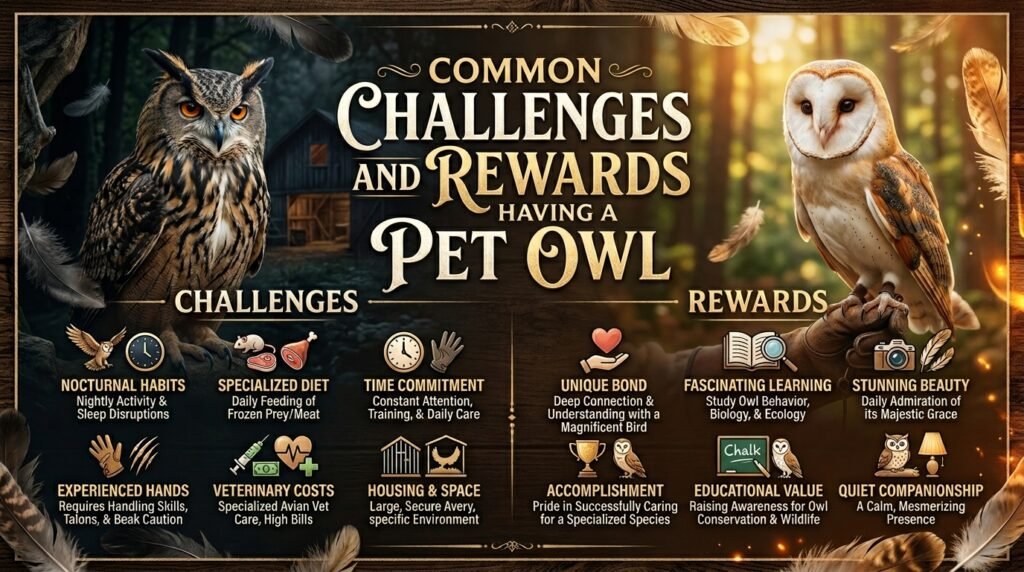
Owning a pet owl comes with both rewards and challenges. One major challenge is their nocturnal pet behavior, which can disrupt household routines. They also require a specialised owl diet, regular health checks, and owl training for enrichment. Costs of owning an owl can be significant, including food, veterinary care, and owl enclosure setup.
However, the rewards are equally compelling. Owl companionship is unique; these creatures are intelligent, interactive, and form strong bonds with their owners. Watching owl behavior and seeing them thrive under proper care provides immense satisfaction. Many owners report that their pet owl offers a sense of connection unlike any other exotic pet.
Fact: Studies have shown that consistent interaction and proper care can improve the wellbeing of nocturnal pets. Those who invest in understanding owl behavior, diet, and habitat find that the joys outweigh the challenges. With dedication, a pet owl becomes a loyal and fascinating companion.
FAQs
What should I know before getting an owl?
A pet owl needs proper owl care, legal permissions, and a safe owl habitat. Understanding their behaviour and nocturnal nature is essential for happy companionship.
How do I feed this type of bird?
Knowing what owls eat is important. A balanced owl diet with small mammals or prepared food keeps your owl healthy and energetic.
Can they live indoors safely?
Yes, but indoor vs outdoor owl care must be considered. Proper owl enclosure setup and safety measures are essential for indoor living.
How long do they usually live?
The pet owl lifespan varies by owl species. With good owl care and nutrition, many owls live over a decade in captivity.
How do I train or interact with them?
Owl training and teaching owls tricks improves bonding. Daily interaction helps socialise your owl and keeps it mentally active and healthy.
Are there common health issues to watch for?
Watch for common owl diseases like respiratory or digestive problems. Regular check-ups and a proper feeding schedule for owls prevent serious issues.
What makes caring for them rewarding?
Owl companionship is unique. Observing owl behavior, teaching tricks, and providing enrichment creates a strong bond and unforgettable experiences with an exotic pet.
Conclusion
Owning a pet owl can be an incredible experience for those ready to commit. They offer unmatched owl companionship and a chance to observe fascinating owl behavior up close. However, understanding owl care, diet, and habitat is essential for a happy and healthy owl.
Legal aspects, such as owl legal ownership and permits, are just as important as daily care. Setting up a proper owl enclosure, maintaining a balanced owl diet, and providing mental stimulation through owl training ensures your pet thrives. While there are challenges, the rewards of keeping a pet owl are unique. Observing their intelligence, socializing with them, and enjoying their quirky habits makes all the effort worthwhile. With proper preparation, your pet owl will become a cherished and extraordinary companion for years to come.
Are rabbits good pets? Learn pros, cons, care tips, and essential advice for happy, healthy pet rabbits in homes and apartments.