


If you have ever wanted a small animal with a big personality, sugar glider as pets can seem like a lovely choice. Many people in the UK and US feel drawn to their soft look, curious eyes, and playful nature. When you learn about sugar glider as pets, you quickly see why they attract loyal fans.
Still, sugar glider as pets are not just cute pocket companions. They need time, patience, space, and proper care every single day. A pet sugar glider can become deeply attached to you, yet that bond only grows when you meet its social, emotional, and physical needs.
This guide explains why sugar glider as pets can be amazing companions for the right home. It also covers sugar glider pet care, feeding, housing, cost, behaviour, and family fit. By the end, you will know whether sugar glider as pets match your lifestyle and daily routine well.
Sugar Glider as Pets: What You Need to Know First
A pet sugar glider is a small nocturnal marsupial, not a rodent, and that single fact changes almost everything about care. These animals come from Australia and New Guinea, where they live in social groups and glide between trees using a thin body membrane. In captivity, that wild design still shapes daily life. Their active evenings, strong need for companionship, and love of climbing all affect how you plan sugar glider ownership. They do better in pairs or small groups, need a large secure enclosure, and can live for many years when care is correct. That means what to know before getting a sugar glider starts with one simple truth: they are charming, but they are not casual pets.
So, are sugar gliders good pets? Yes, for some people, they absolutely can be. They are intelligent, alert, affectionate, and often very entertaining once they trust you. However, the better question is this: is sugar glider as pets a good idea for your actual home, schedule, and patience level? That is where many people slip up. A sugar glider can feel like a tiny acrobat with the heart of a clingy best mate. Yet the same traits that make them lovable also make them demanding. They want interaction. They notice change. They do not thrive on neglect.
For sugar glider as pets for beginners, the answer needs honesty. A sugar glider for beginners is possible only when the beginner is willing to learn fast, spend consistently, and build routines around the animal rather than the other way round. If you are asking are sugar gliders hard to take care of, the fairest answer is yes, compared with hamsters or guinea pigs. If you are asking is a sugar glider a low maintenance pet, the answer is no. They need specialised food, careful housing, enrichment, social contact, and exotic-vet access. Think of them less like a decoration in a cage and more like a tiny, busy flatmate who never stops needing structure. That is the real heart of things to consider before owning a sugar glider.
Benefits of Keeping Sugar Glider as Pets at Home
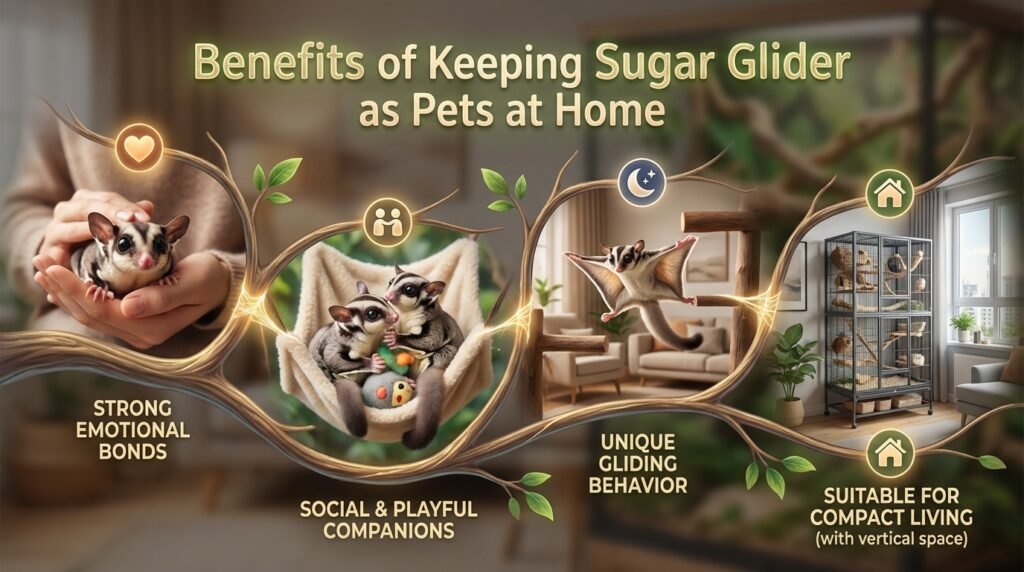
The best part of keeping sugar gliders is the bond. Many owners fall in love not just with the animal, but with the relationship. A strong connection often grows through daily handling, calm voice cues, pouch time, and predictable routines. This is where sugar glider bonding becomes special. They often learn your scent, your tone, and your patterns. Over time, they may climb onto you, rest in a bonding pouch, or seek you out during evening play. That is why people searching are sugar gliders friendly pets often hear mixed answers. They are not instantly friendly in the way some dogs can be. Instead, they become deeply social when trust has been earned. In plain terms, they are not a quick win. They are a slow-burn companion, and that makes the result feel more meaningful.
Another reason sugar glider as pets can be amazing companions is their playful energy. Their sugar glider behavior feels lively, clever, and a little mischievous. They climb, leap, explore, and investigate like tiny gymnasts on a secret mission. That playful streak can make home life feel brighter. There is something oddly cheering about an animal that treats a curtain rail like an adventure park. At the same time, their rhythm is different from many popular pets. Their sugar glider nighttime behavior means they wake when the house quiets down. Their sugar glider sleeping habits mean they often spend the day curled up in a pouch. For night owls, remote workers, or people who enjoy evening pet time, that can be a real advantage. For early sleepers, it can feel awkward. The pet is not wrong. The fit might be.
Their social side also gives them real emotional presence. Sugar glider social needs are not a minor detail. They are central to welfare. Sugar gliders usually fare better in pairs or groups and may develop stress-related problems if isolated. That is why people ask do sugar gliders need a companion and can sugar gliders live alone. In practice, a lone glider often places all emotional demand on you, which rarely works well unless you can provide intense daily time. Even then, companionship is usually better. If your goal is how to keep sugar gliders happy, this is one of the biggest answers: give them healthy social contact, safe enrichment, and a calm predictable environment. That is where much of the magic begins.
The pros and cons of sugar glider as pets are worth stating clearly. On the bright side, they are affectionate, unusual, intelligent, and genuinely engaging. On the harder side, they can be noisy, delicate, expensive, and demanding. A sensible owner holds both truths at once. That balance is what makes the decision wise instead of romantic. A sugar glider can be a wonderful companion, but only when admiration is matched by preparation.
Sugar Glider as Pets: Care, Diet, and Daily Needs
If you want to learn how to care for sugar glider as pets, start with routine. Good sugar glider pet care is not about one clever trick. It is about repeating the basics well. A proper sugar glider as pets care guide always comes back to the same pillars: safe housing, correct feeding, daily observation, social contact, enrichment, and access to an exotic vet. Strong sugar glider care also means reading behaviour closely. If the animal stops eating, seems dull, isolates itself, or over-grooms, something may be off. Good sugar glider home care is less glamorous than online videos make it look. It is quiet, steady, and detailed. Think dishes washed daily, food removed promptly, pouches cleaned, routines kept, and stress reduced. That is what helps a companion animal feel secure.
A healthy sugar glider habitat should feel tall, safe, enriched, and escape-proof. These animals do not just sit and nibble. They climb, jump, glide, hide, and explore. Their sugar glider habitat requirements include vertical space, sleeping pouches, branches or ropes, safe toys, and secure wire spacing. A pair needs a large enclosure with careful bar spacing to prevent escapes. That size is really a minimum, not a dream setup. Better sugar glider living conditions usually mean going larger where possible. The best cage for sugar glider as pets is tall rather than short, sturdy rather than flimsy, and placed away from direct sun, draughts, and household chaos. A smart sugar glider cage setup also includes secure latches, because these little escape artists can outsmart lazy cage doors. A good sugar glider pet setup makes life easier for you and calmer for the animals.
| Area | What matters most | Why it matters |
| Enclosure | Tall, secure, well-ventilated cage | Supports climbing and reduces escape risk |
| Sleeping area | Soft pouch or nest space | Matches natural daytime resting behaviour |
| Enrichment | Safe toys, ropes, branches, foraging options | Prevents boredom and stress |
| Feeding zone | Clean bowls and fresh water | Supports hygiene and daily intake |
| Location | Quiet room away from extremes | Helps stability and lowers stress |
Feeding is where many owners need the most caution. A proper sugar glider diet is more complex than tossing in fruit and hoping for the best. In the wild, they eat sap, pollen, nectar, and invertebrates. So, what do sugar gliders eat? A sensible answer includes a carefully planned staple diet, measured fruit and vegetables, and appropriate protein sources as advised by an exotic vet or evidence-based care plan. Good sugar glider food supports bone health, energy, hydration, and digestion. Strong sugar glider diet and nutrition is not about variety alone. It is about balance. Too much sweet fruit, too little protein, or poor mineral ratios can create real trouble over time.
A realistic sugar glider daily care routine should fit real life, not fantasy. In the morning, you check water, remove leftovers, and do a quick welfare glance. In the evening, you refresh food, clean dishes, handle light spot-cleaning, and allow time for supervised interaction or bonding. Weekly, you carry out deeper cleaning. This is part of sugar glider maintenance, and it is more important than many first-time owners expect. Add in sugar glider exercise needs, toy rotation, and occasional safe free-play time, and the routine becomes quite involved. Sugar glider grooming is usually less about fancy brushing and more about monitoring coat quality, nails, cleanliness, and signs of over-grooming. When owners ask how much work is hidden behind the cuteness, this is the answer: enough that planning ahead matters.
Good sugar glider health care always starts with prevention. A new sugar glider should be checked by a veterinarian trained in exotic animal care soon after adoption. That early visit helps spot issues before they grow. Common sugar glider health problems can include dehydration, nutritional imbalance, stress-linked issues, and injuries. In plain language, these animals can go downhill faster than owners expect. That is why close observation matters so much. Changes in appetite, posture, droppings, energy, or coat condition should never be brushed off with a shrug. The old saying fits here: a stitch in time saves nine. With sugar gliders, it may save much more than that.
Sugar glider training is less about party tricks and more about trust, predictability, and reduced fear. The best sugar glider bonding tips sound almost boring because they rely on consistency. Use a calm voice. Keep handling gentle. Offer bonding pouch time. Move slowly. Respect their active hours. Let them learn that your presence means safety, not stress. One owner story often repeated in exotic-pet communities goes like this: the glider seemed distant for weeks, then suddenly began climbing willingly onto the owner’s hand each evening. That moment feels small on paper. In real life, it can feel like winning the lottery. Trust is the currency that makes sugar glider bonding work.
When people ask how long do sugar gliders live, they are really asking how long the commitment lasts. Captive sugar glider lifespan often ranges from around 9 to 15 years depending on husbandry. Either way, the message is the same: this is not a short fling. It is a long responsibility. That lifespan alone should make anyone pause before buying on impulse.
Cost matters too. People often ask how much do sugar gliders cost, yet they usually mean more than the purchase price. The full sugar glider cost includes the enclosure, pouches, wheels or climbing enrichment, food, supplements where appropriate, cleaning supplies, and exotic-vet care. Initial costs can range from several hundred to several thousand pounds or dollars when setup and supplies are included. That figure may shift by region, breeder, rescue source, and cage quality, but the core lesson stays the same. Cheap entry often becomes expensive regret. Good care costs money because good welfare always does.
Common Challenges of Raising Sugar Glider as Pets
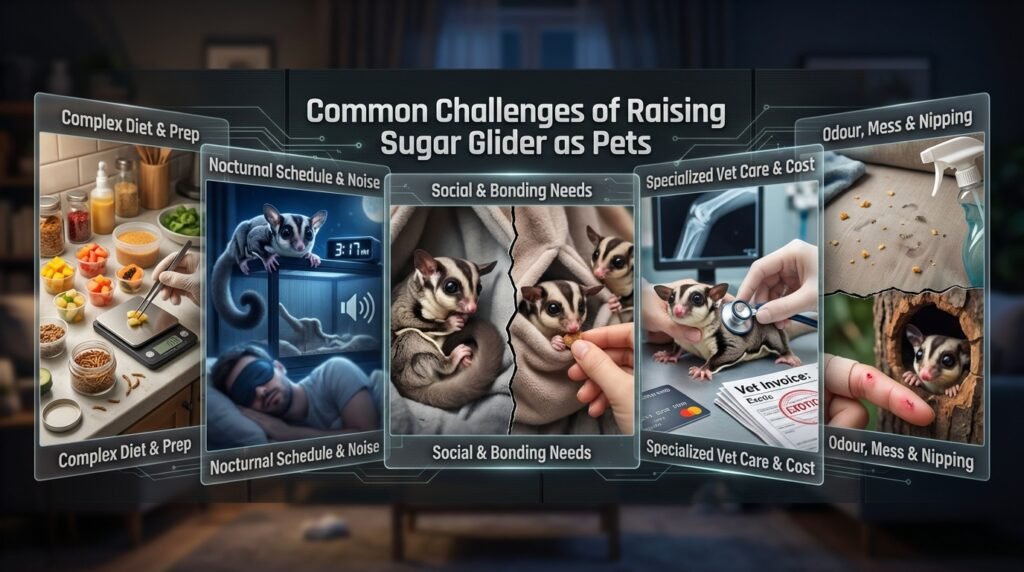
One of the biggest challenges is that the care standard is narrow. If you ask again, are sugar gliders hard to take care of, the answer stays yes for most households. Not impossible. Not hopeless. Just exacting. This is why sugar glider as pets for beginners needs careful framing. They can work for determined beginners, but not for distracted ones. There is a difference, and the animal pays for it when people ignore that line.
Social structure is another major challenge. We have already touched on can sugar gliders live alone and do sugar gliders need a companion, but the issue deserves emphasis. A lonely glider is not simply a quieter glider. It may become stressed, withdrawn, noisy, or behaviourally unsettled. Meeting sugar glider social needs is not optional window dressing. It is a core welfare issue. Owners who treat companionship as a luxury extra often end up solving problems they accidentally created.
Then there is biting. So, do sugar gliders bite? They can. Most of the time, biting is not a sign that the animal is mean. It is more often fear, stress, startle, territory, pain, or poor handling. Understanding sugar glider behavior helps here. A frightened glider may act like a tiny drama queen with teeth. That sounds funny, but the point is serious. Respecting pace, scent familiarity, and calm handling reduces the odds of defensive bites. Trust grows slowly. Forced bonding usually backfires.
Noise and timing can also catch people off guard. Because of their sugar glider nighttime behavior, they may bark, climb, leap, or rustle when you want silence. Their sugar glider sleeping habits also mean a child hoping for daytime play may end up disappointed. For some homes, this is fine. For others, it is like inviting a night-shift gymnast into your bedroom. Charming in theory. Less charming at 2 am.
Is Sugar Glider as Pets a Good Choice for Your Family?
Whether sugar glider as pets suit your family depends less on affection and more on fit. Families with older children, calm routines, and realistic expectations may do well. Homes full of noise, rough handling, or unpredictable schedules may struggle. If you are still wondering are sugar gliders friendly pets, think of them as sensitive companions rather than easy entertainment. They can be loving, but they need gentleness and respect in return.
For busy homes, the question is sugar glider as pets a good idea becomes sharper. If everyone leaves early, returns late, and wants a pet that asks very little, the answer is probably no. That also answers is a sugar glider a low maintenance pet. Again, no. A better fit is someone patient, observant, and genuinely interested in daily care. The best owners enjoy the routine. They do not merely tolerate it.
A simple way to judge fit is to ask whether you want a fascinating animal or whether you want an easy pet. Those are not always the same thing. For the right person, exotic pet sugar glider life can feel rewarding, funny, and deeply affectionate. For the wrong person, it can feel like a string of avoidable problems. That is why careful thought always beats impulse.
Sugar Glider as Pets vs Other Small Companion Animals
Compared with hamsters, guinea pigs, and rabbits, sugar glider as pets often demand more specialised feeding, more vertical housing, more evening interaction, and more attention to social pairing. In return, they offer a very unusual kind of companionship. They are alert, tactile, and highly engaging when bonded. A hamster may be easier. A rabbit may be more predictable. A sugar glider may feel more like sharing life with a tiny aerial trickster that remembers you.
FAQs
What makes them special as companions?
Sugar glider as pets feel affectionate, playful, and social when care is right and trust grows slowly over time.
Are they easy for first-time owners?
Sugar glider as pets can suit beginners, but only with strong research, patience, and proper daily routines.
What should they eat each day?
A healthy plan for sugar glider as pets includes balanced sugar glider food, protein, and carefully managed fruit and vegetables.
Do they need to live with another one?
Yes, sugar glider as pets usually do better with company because their sugar glider social needs are very strong.
How long can they stay with you?
With excellent sugar glider pet care, sugar glider as pets may live for many years in captivity.
Are they expensive to keep?
Yes, sugar glider as pets bring enclosure, feeding, enrichment, and exotic-vet costs that add up quickly.
Can they suit a family home?
Sugar glider as pets can suit calm families, especially when everyone respects handling, routine, and quiet bonding time.
Conclusion
Sugar glider as pets can be amazing companions when you understand what they truly need. They are bright, social, funny, and full of charm. A strong bond with sugar glider as pets can feel warm, rewarding, and surprisingly deep for many owners.
At the same time, sugar glider as pets are not simple starter animals. They need company, careful feeding, daily attention, safe housing, and proper exotic-vet support. If you ignore those basics, the experience can turn stressful for you and unfair for them. That is why the best choice comes from honesty, not impulse. If your lifestyle matches their needs, sugar glider as pets may become delightful long-term companions. If your home cannot meet those needs, another pet may suit you better. Good decisions protect welfare. Great decisions also build a happier bond for years ahead too.
Find comforting words for loss of pet that feel sincere, gentle, and helpful when you need the right thing to say.