
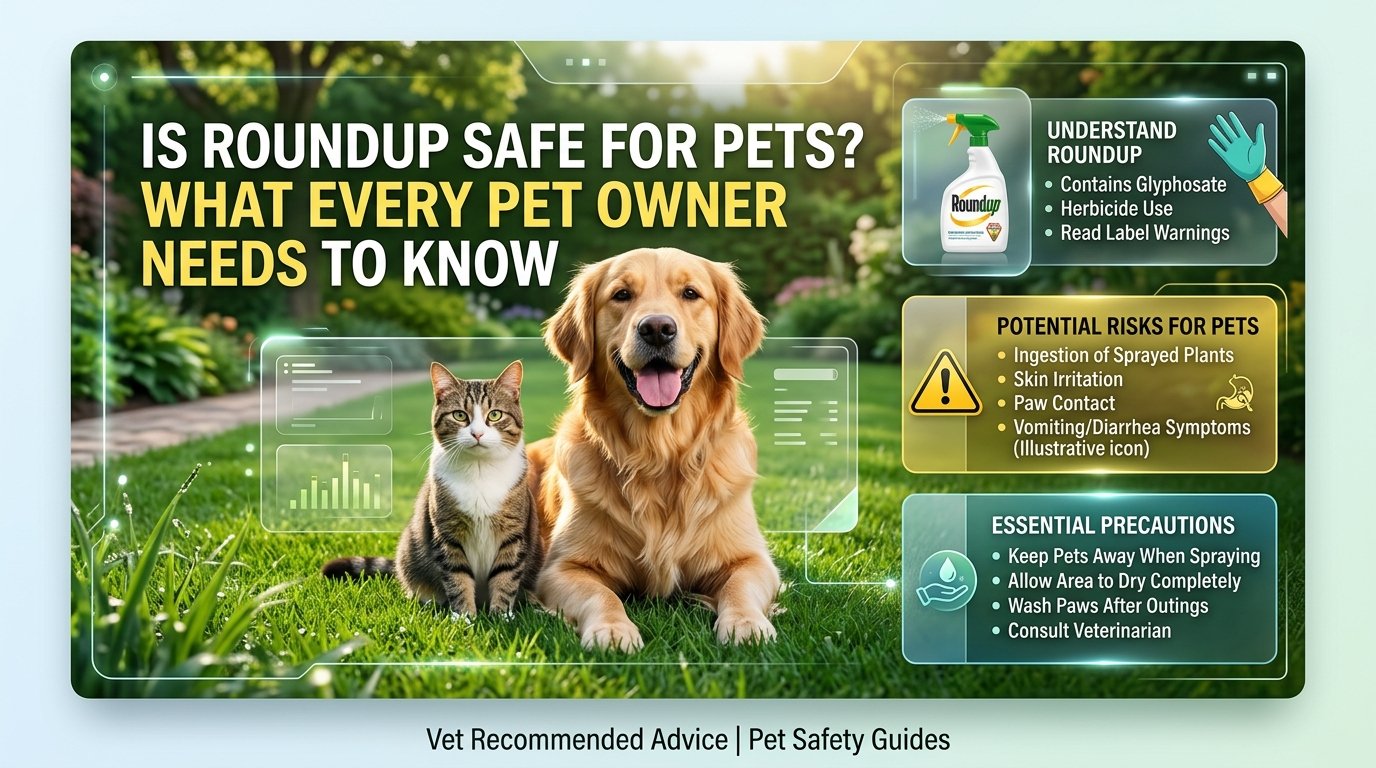

If you are a pet owner, you might have asked yourself, is Roundup safe for pets? Every year, millions of households use Roundup to keep lawns clean and free of weeds. But pets often wander where chemicals are sprayed, which raises serious concerns. Understanding Roundup and pets safety is more important than ever.
Many pet owners worry about glyphosate pet exposure. Dogs and cats explore with their noses and mouths. This means even small amounts of Roundup on grass can be risky. Knowing safe lawn care for pets helps prevent accidental poisonings.
Before using Roundup, you need to ask, can pets be harmed by Roundup and what are the Roundup side effects on pets. By learning about pet-friendly herbicides and proper precautions, you can protect your furry friends while keeping your garden weed-free.
Understanding the Question: Is Roundup Safe for Pets?
The question ” Roundup safe for pets” comes up often for good reason. Roundup contains chemicals like glyphosate, which can pose chemical exposure risks to pets if ingested or touched. Pets are naturally curious, sniffing and sometimes eating grass, which increases the chances of pet poisoning from weed killers.
For dogs, Roundup toxicity for dogs can cause vomiting, lethargy, and diarrhoea, while cats may experience similar symptoms, which is why Roundup toxicity for cats is also a concern. Many vets warn that even small amounts can be harmful. It’s essential to understand how these chemicals affect your pet’s health.
Experts often advise pet owners to consider glyphosate safety for animals and always check product labels. Asking yourself if it is safe to use Roundup around pets is the first step in preventing accidents. Simple precautions can make a big difference in keeping pets healthy.
Common Chemicals in Roundup and Their Impact on Pets
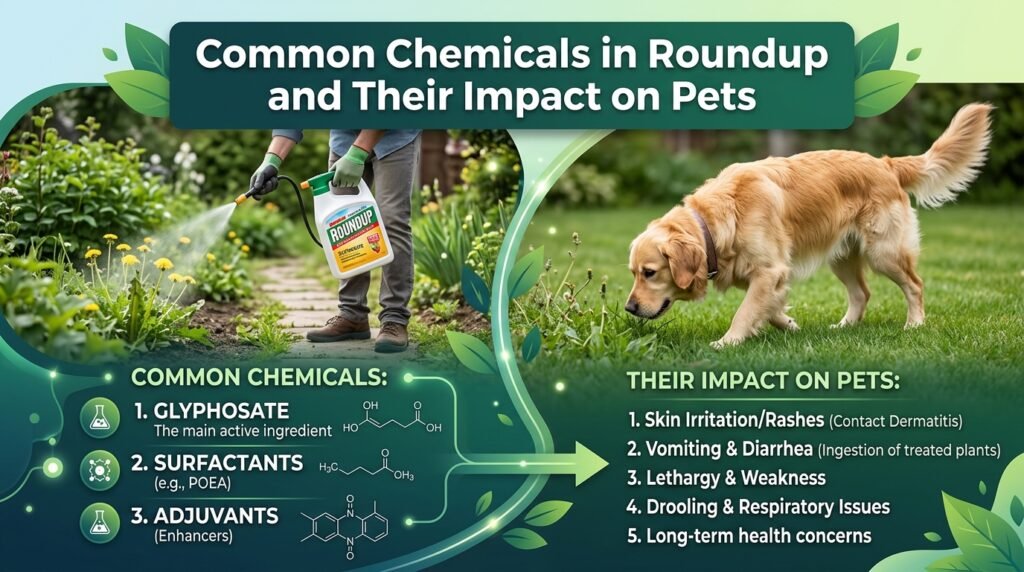
Roundup primarily contains glyphosate, a chemical herbicide that controls weeds effectively. However, its impact on animals can be concerning. Studies show that prolonged glyphosate pet exposure can lead to irritation of the stomach and skin. Other ingredients in Roundup may contain surfactants that amplify toxicity, creating toxic chemicals for pets.
Pet health and weed killers are closely linked. Dogs often lick treated grass, which can result in Roundup exposure symptoms in pets such as drooling, vomiting, and decreased appetite. Cats are also vulnerable since Roundup toxic to cats is a real concern among vets. Even if exposure is accidental, accidental pet poisoning from Roundup is possible.
Knowing the chemicals in Roundup helps you make informed decisions. Pet-friendly herbicides exist, providing effective weed control without risking your animals’ well-being. Understanding herbicide safety around animals allows you to choose options that reduce risk while keeping your garden healthy.
Signs Your Pet May Be Affected by Roundup Exposure
Recognising signs of chemical poisoning in pets early is vital. Symptoms of Roundup exposure symptoms in pets can vary from mild to severe. Common warning signs include vomiting, diarrhoea, drooling, lethargy, and difficulty breathing. Pets might also show behavioural changes, hiding or refusing food.
If you notice any of these signs, it’s important to act quickly. Asking yourself what happens if pets ingest Roundup can help you understand the urgency. Contact your veterinarian immediately and describe how dangerous is Roundup for dogs or cats. Early intervention can prevent serious illness.
Preventive care is also essential. By preventing pet exposure to chemicals and using pet-safe weed control methods, you reduce the chance of harmful effects. Always keep pets away from freshly treated areas and store chemicals securely to avoid pets and toxic lawn products incidents.
How to Use Roundup Safely Around Pets
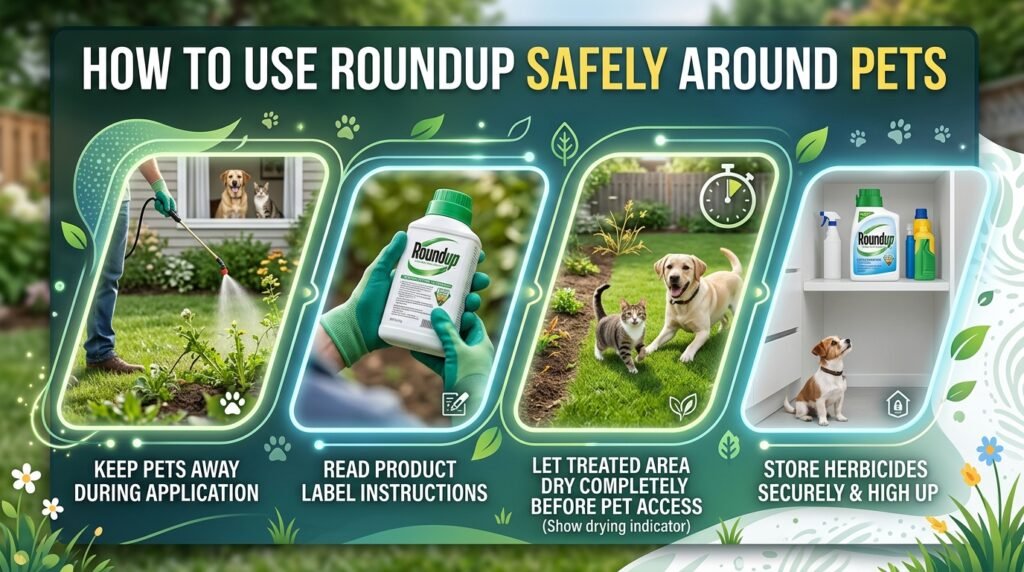
Using Roundup does not have to endanger your pets if you follow safety measures. First, always read the label to check Roundup and pets safety instructions. Apply chemicals when pets are indoors and keep them out until the product has dried. This helps prevent chemical exposure risks pets face.
Consider the timing and method of application. Spraying early in the morning or late in the evening when pets are less likely to be outside can reduce risks. If pets accidentally enter treated areas, clean their paws and fur immediately. This reduces the likelihood of accidental pet poisoning from Roundup.
For pet owners who want extra caution, safe lawn care for pets involves using barriers or choosing pet-friendly herbicides. These steps provide peace of mind and answer the question can pets be harmed by Roundup while still maintaining a weed-free garden.
Alternatives to Roundup: Safe Options for Pet Owners
There are plenty of safe alternatives to Roundup for conscientious pet owners. Non-toxic garden solutions such as vinegar-based herbicides, boiling water, or manual weeding can be highly effective without posing risks. Using these approaches ensures herbicide safety around animals.
For those seeking convenience, some companies offer pet-friendly herbicides that reduce Roundup side effects on pets. Choosing these options is a smart move if you are concerned about glyphosate safety for animals. Maintaining a lush, weed-free lawn does not have to compromise your pet’s health.
Additionally, regular lawn care habits, like mowing and mulching, can prevent weeds naturally. By implementing pet-safe weed control methods and protecting pets from herbicides, you create a garden environment that is safe, healthy, and enjoyable for your furry companions.
FAQs
Can pets get sick from weed killers?
Yes, dogs and cats may feel weak, vomit, or drool if they touch or eat treated grass. Glyphosate and other chemicals can cause mild to serious illness.
How fast do pets show symptoms?
Pets usually show signs within hours. They may act tired, lose appetite, or become unusually quiet after contacting lawn chemicals.
Are some animals more vulnerable?
Small dogs, kittens, and elderly pets are more sensitive. Their bodies process chemicals faster, making them prone to stronger effects from herbicides.
What should I do if pets ingest treated grass?
Rinse their mouth and clean their paws immediately. Contact a veterinarian quickly to prevent serious health problems from exposure to chemicals.
Is it safe for pets to walk on treated lawns?
No, pets should avoid areas until the product dries. Walking too soon can cause chemical absorption through paws or licking.
Are there safer options for lawns?
Yes, non-toxic sprays, vinegar, or manual weeding work well. Using pet-friendly herbicides protects animals while keeping lawns weed-free.
How can I prevent future exposure?
Store chemicals safely indoors and supervise pets outside. Use barriers or pet-safe weed control methods to reduce accidental poisonings.
Conclusion
So, is Roundup safe for pets? The short answer is, it can be risky if proper precautions are not followed. Understanding Roundup and pets safety is the first step in protecting your dogs and cats.
Always monitor for Roundup exposure symptoms in pets and act immediately if any signs appear. Using pet-friendly herbicides or other safe alternatives to Roundup is the best way to prevent chemical exposure risks pets face. Keeping pets away from treated areas ensures their health and safety.
By following safety measures and considering glyphosate safety for animals, you can enjoy a clean garden without putting your pets at risk. Remember, asking can pets be harmed by Roundup and learning how to keep pets safe in treated areas is essential for every responsible pet owner.
Simple and effective easy pet care tips for busy pet lovers. Learn routines, feeding, grooming that save time and keep pets healthy and happy.
Is Roundup Safe for Pets Is Roundup Safe for Pets Is Roundup Safe for Pets Is Roundup Safe for Pets Is Roundup Safe for Pets Is Roundup Safe for Pets Is Roundup Safe for Pets Is Roundup Safe for Pets Is Roundup Safe for Pets Is Roundup Safe for Pets Is Roundup Safe for Pets Is Roundup Safe for Pets